AI Agents Explained: The Next Evolution of Business Automation

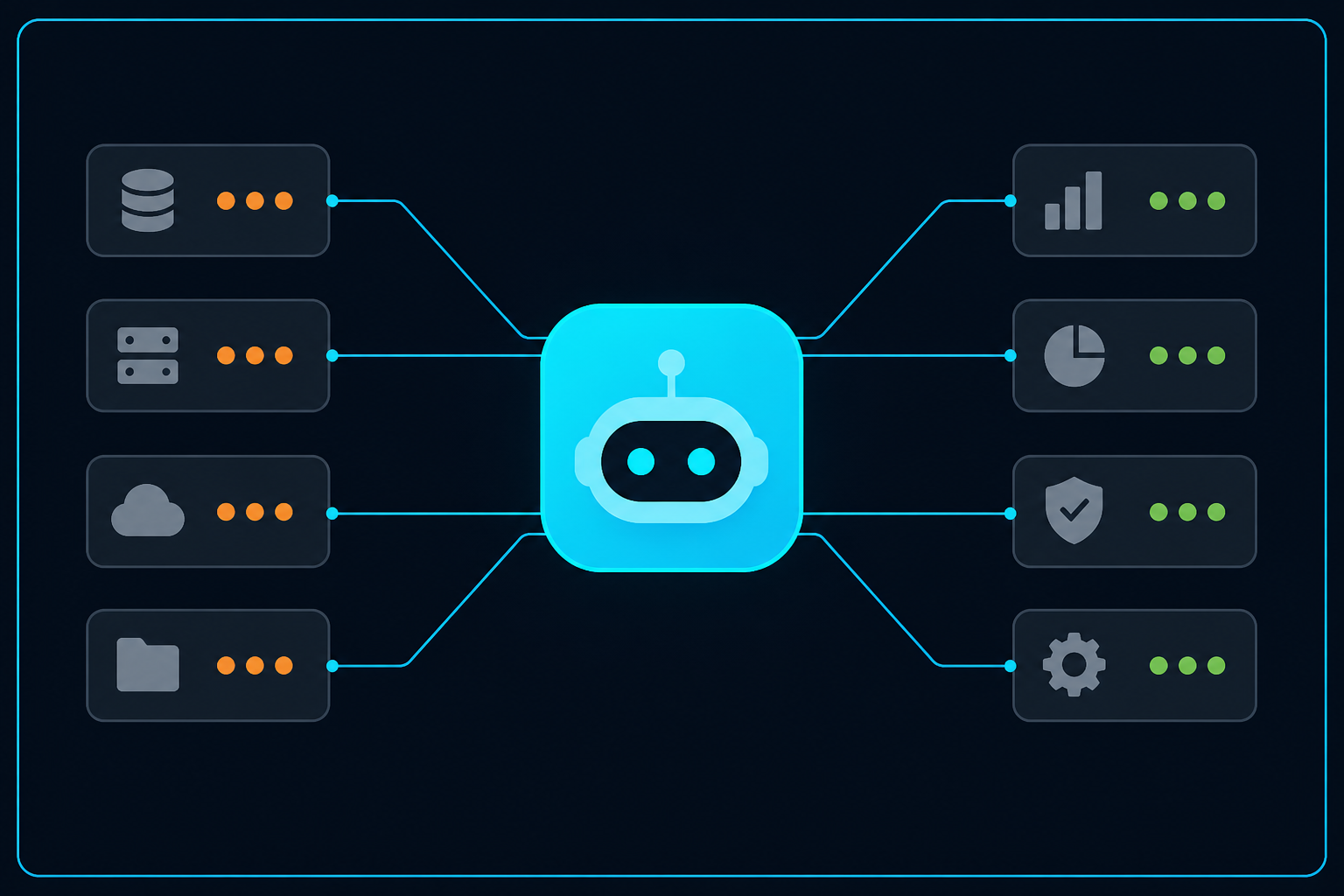


Business Automation has evolved steadily, from macros and scheduled jobs to integrated workflows connecting CRM, finance, and operations systems. AI agents represent the next step: software that can plan multi-step tasks, use tools, retrieve information, and adapt within defined boundaries.
For enterprise leaders evaluating AI Integration, understanding agents is essential. They are not science fiction, nor are they magic. They are orchestration layers that combine language models, APIs, and business rules to complete work that previously required human coordination across systems.
An AI agent is a system that receives a goal, breaks it into steps, executes actions through connected tools, observes results, and adjusts until the task is complete or escalates to a human. Unlike a simple chatbot that responds to single prompts, an agent might:
Each example combines reasoning, tool use, and guardrails: the hallmarks of production agent design.
Understanding the distinction helps you choose the right approach:
Agents excel where tasks vary in structure but follow definable business logic. They are less suited to high-frequency transactional processing better handled by conventional automation, unless hybrid designs combine both.
Manages the agent loop: plan, act, observe, refine. Frameworks and Custom AI Software platforms provide this structure, but enterprise deployments need logging, timeouts, and step limits to prevent runaway behaviour.
Agents interact with your systems through defined tools (API calls, database queries, document retrieval, email drafts). Each tool should have explicit permissions and input validation. Never give an agent unrestricted access to production systems.
Short-term memory holds the current task context. Long-term memory may store user preferences or session history. For regulated industries, retention policies must align with privacy requirements.
Define what agents can do autonomously versus what requires approval. Financial transactions, customer commitments, and policy exceptions should trigger human review. Guardrails include allowlists, output validation, and escalation rules.
Patterns we see gaining traction in AI Consulting Australia engagements:
Each use case should start with a narrow scope and expand only after reliability is proven.
Agents introduce risks beyond standard software:
Responsible AI practices are not optional for Enterprise AI agents operating on business-critical workflows.
Phase 1: Design: Select one workflow with clear steps, measurable outcomes, and manageable risk. Document current manual process and decision points.
Phase 2: Pilot: Build an agent with limited tools in a staging environment. Test edge cases extensively with domain experts.
Phase 3: Production: Deploy with monitoring, human approval gates, and a support model. Capture baseline metrics before and after.
Phase 4: Scale: Expand tools and use cases incrementally. Reuse orchestration patterns and governance frameworks.
AI agents are the next evolution of Business Automation for organisations ready to move beyond single-turn AI interactions. Built thoughtfully, they free teams from coordination overhead and accelerate work that spans multiple systems, with humans still in control where it matters.